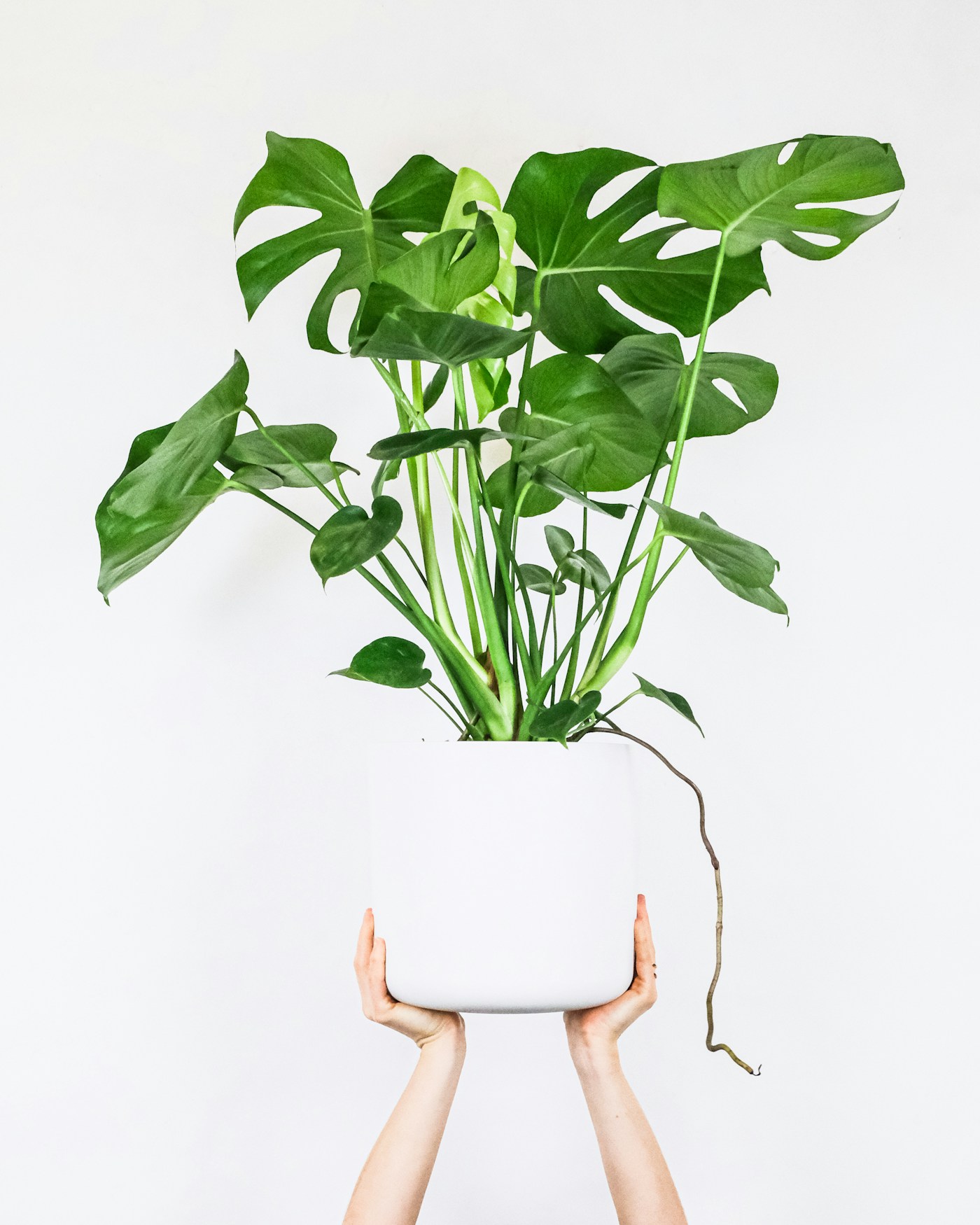
The Swiss Cheese Plant has been dominating interior design for decades — and for good reason. Here's everything you need to know to grow one successfully in an urban apartment.
Few houseplants make a statement quite like Monstera deliciosa. Native to the tropical rainforests of southern Mexico and Central America, this plant has evolved to thrive under the dappled light of a rainforest canopy — which makes it surprisingly well-suited to life in a north-facing apartment.
Why Do Monstera Leaves Have Holes?
Those iconic fenestrations (the scientific term for the holes and splits) are no accident. Botanists have several theories, but the most widely accepted is that they help the leaves withstand high winds without tearing — important in a tropical canopy where storms are frequent. Another theory: the holes allow dappled light to pass through to lower leaves, maximising the plant's photosynthetic efficiency.
Young Monstera plants don't have fenestrations — the holes develop as the plant matures and leaves grow larger. If your plant is producing small, solid leaves even after a few years, it's likely not getting enough light.

Light Requirements
Monstera thrives in bright, indirect light — a spot 1–2 metres from a south or east-facing window is ideal. They can tolerate lower light conditions, but growth will be slow and leaves will lack fenestrations. Direct afternoon sun can scorch the large leaves.
💡 Quick Care Reference
- Light: Bright indirect light; tolerates low light
- Water: Every 1–2 weeks; let top 2" dry between waterings
- Humidity: Appreciates 60%+ but adapts to average home humidity
- Temperature: 18–30°C; avoid cold drafts below 12°C
- Soil: Well-draining aroid mix (perlite + bark + peat)
- Fertilise: Monthly during growing season (spring–summer)
- Repot: Every 2 years, spring
Watering
Overwatering is the most common way to kill a Monstera. These plants store water in their thick stems and can go 2–3 weeks between waterings in winter. The rule of thumb: water when the top two inches of soil feel dry. Always check before watering — never follow a calendar schedule blindly.
Yellow leaves are usually a sign of overwatering. Brown, crispy leaf edges typically indicate underwatering or low humidity.
Propagation: How to Make More Monsters
Propagating Monstera is straightforward and deeply satisfying. Take a stem cutting that includes at least one node (the brown, slightly swollen joint where leaves emerge) and one or two leaves. Place the cutting in water in a bright spot, changing the water weekly. Roots should appear within 2–6 weeks.
Once roots are 5–10cm long, pot up in a well-draining mix. Expect some leaf droop for the first week or two as the plant adjusts to soil.
The Aerial Roots — Don't Cut Them
Mature Monsteras produce thick aerial roots that can look untidy but serve an important function. In the wild, they anchor the plant to tree trunks and absorb moisture. Indoors, you can train them into the pot to supplement the root system, or tuck them discreetly behind a moss pole. Try to avoid cutting them — the plant directs significant energy to growing them.
Toxicity Warning
Monstera leaves and stems contain calcium oxalate crystals, which are toxic to cats, dogs, and humans if ingested. Keep out of reach of pets and small children. Sap can also cause skin irritation — wear gloves when handling or propagating.
🌿 Best Varieties for Urban Spaces
- Monstera deliciosa — The classic; can reach 3m indoors
- Monstera deliciosa 'Thai Constellation' — Stunning cream-splashed variegation; slow growing
- Monstera adansonii — Smaller leaves, more holes; perfect for shelves and trailing
- Monstera dubia — Rare shingling type; climbs flat against walls